

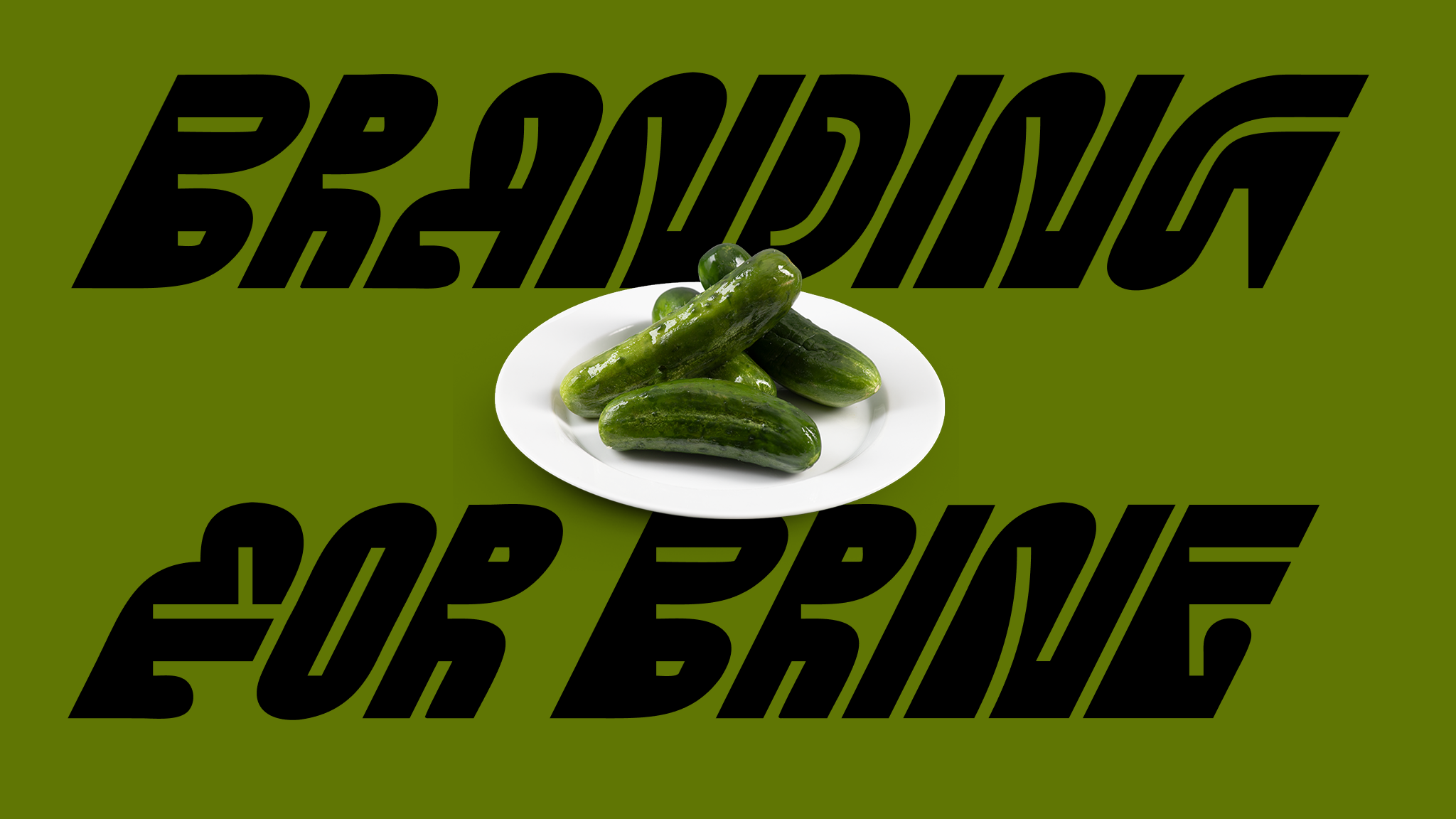
Food should be fun. And because of that, CPG has long been a testing ground for design. Before trends show up in tech or finance, they tend to appear on grocery shelves where competition is fierce and delight matters most. The pickle aisle is especially tricky. It’s crowded and loyalty runs deep. That tension reveals an uncomfortable truth about branding: good design can only do so much and it can’t fix a product problem. If the pickle doesn’t deliver, no amount of great packaging will bring people back.
Let’s look at how a range of pickle brands—both generational favorites and new challengers—use design to navigate novelty and earn trust.
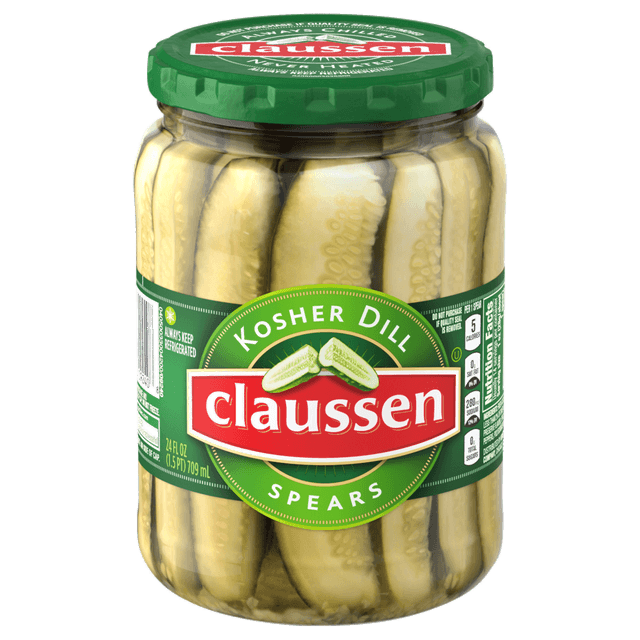
A beloved pickle and established leader in the salty, sour space. Claussen has been at it since 1870. Ninety years later, they developed the first refrigerated pickle to preserve freshness and crunch. From a design perspective, their brand isn’t anything to write home about. It’s corporate, it’s safe. And notably, there’s no mascot. Which can be a very smart play for a heritage brand: it communicates consistency, reliability, and self-assuredness.
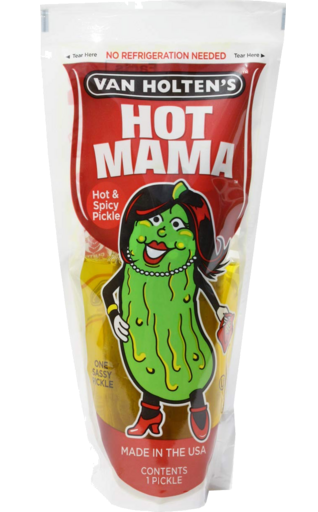
A silly road trip must-have. Van Holten’s was founded in 1898 and developed the original Pickle-in-a-Pouch in 1939. They’ve since introduced a full cast of characters, including Hot Mama (accessorized diva with great hair) and Garlic Joe (grows facial hair and never skips arm day). A pickle mascot is an obvious choice for a pickle brand, but Van Holten’s takes it a step further. They’ve assigned human archetypes to flavor profiles in a way that feels less like branding strategy and more like a Saturday-morning cartoon. It’s kitschy, chaotic, and the right level of unseriousness for a pickle pouch.

Vlasic is classic. From the 1940s to the 1970s, Vlasic expanded from a Michigan favorite to a national brand. What really solidified Vlasic’s place wasn’t a product tweak, but a mascot: the iconic stork, who took flight in 1974. This was an early—and lasting—example of a brand responding to trends. Birth rates were down. Pregnant women crave pickles. Vlasic combined these insights to introduce an unexpected mascot, and it worked. We’d venture to guess that if they tried retiring the stork, people would riot (remember when M&M’s replaced the green one’s go-go boots with sneakers and everybody freaked out?).
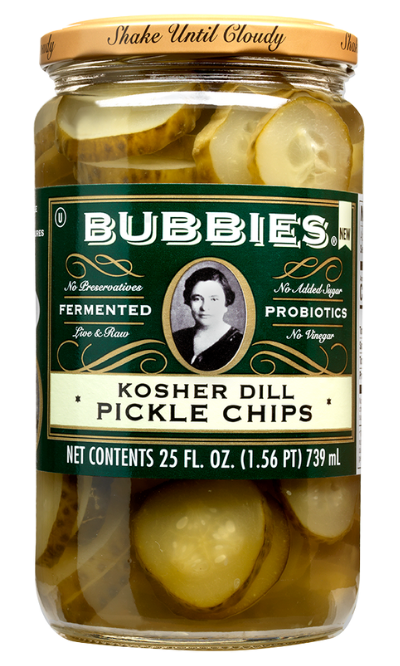
A relatively new-ish pickle brand with a heritage, homemade feel. Bubbies started in 1982 and came under new ownership in 1989. And then we met their real-life Bubbie, whose legacy lives on through pickles. It’s uncommon for a real person to serve as mascot, but it makes sense in this space. You see her on the jar and associate her with the kind of old-world recipe that hasn’t changed because it never needed to. You look into her eyes and know she means business.

An instant classic if there ever was one. Grillo’s hit the scene in 2008 and quickly became a definitive favorite. Where other pickle mascots work hard, Sam Sam the Pickle Man kicks back. He invites consumers to live a little. After all, what’s the rush? Grillo’s combines the best of both worlds: an old-school recipe and distinctly Gen Z brand. Their social media is rich with memes. They’re hosting influencer events. They sent Sam Sam to crowd surf at a music festival. With their popularity, Sam Sam has proven he can hold his own against iconic mascots from older brands.

The most explicitly trendy pickle on the market. Released in February 2024, Hot Girl Pickles centers around the “hot girl” trend (hot girl walks, girl dinners, and the assertion that hot girls get tummy aches). It’s unapologetically Gen Z and capitalizes on a massive cultural moment. But building on a trend comes with risk. What happens when, like all trends, “hot girl” inevitably falls out of favor? What does future-proofing look like when a brand identity hinges on a fleeting phrase? As PwC notes in its report on Gen Z spending behavior: “But to stay in the ‘must-buy’ category, these items need more than aesthetic appeal. They need to feel smart—endorsed by creators, justified by value transparency, and surfaced through algorithmically tailored feeds.”
Pickles show us the value and the limits of branding. Design sets the tone, but flavor seals the deal. The brands that last understand when to experiment and when not to mess with what already works. When it comes to dressing a burger or satisfying a midnight snack craving, the snap matters more than spectacle.
Sources:
https://www.delimarketnews.com/shop-talk/founder-and-ceo-travis-grillo-discusses-grillos-pickles-origin-story/anne-allen/mon-08192019-1122/8326
https://www.pwc.com/us/en/industries/consumer-markets/library/gen-z-consumer-trends.html
https://www.lurestudio.com.au/blog/hot-girl-pickles-a-marketing-case-study
https://www.mentalfloss.com/article/64109/why-vlasic-pickles-mascot-stork
https://vanholtenpickles.com/our-story-2/
https://onmilwaukee.com/articles/van-holtens-pickles
https://onmilwaukee.com/articles/van-holtens-2025
https://www.bubbies.com/about
https://news.kraftheinzcompany.com/press-releases-details/2020/Refrigerated-Pickles-Pioneer-Claussen-Celebrates-150-Years/default.aspx

